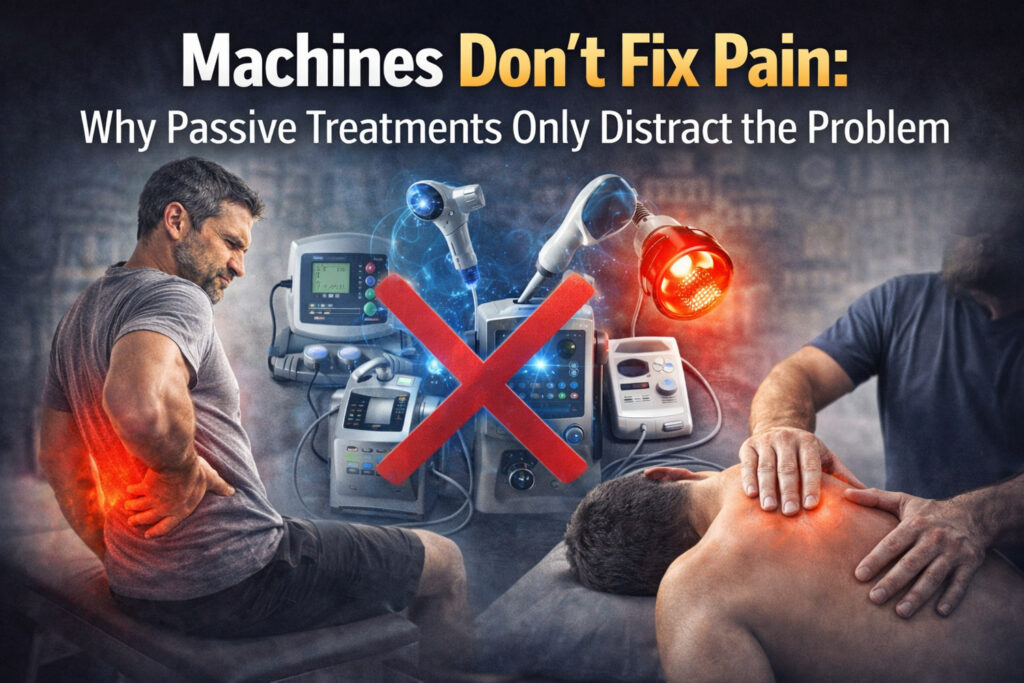
Machines Don’t Fix Pain: Why Passive Treatments Only Distract the Problem
By Super Myo | Allied Health Professional & Manual Therapy Truth-Teller Who Keeps it Real!
Machines Don’t Fix Pain
Walk into almost any clinic and you’ll see the same lineup.
TENS machines.
Ultrasound wands.
Shockwave guns.
Heat packs.
Red lights.
And the pitch usually sounds convincing.
“This will stimulate healing.”
“This increases blood flow.”
“This calms the nerves.”
Here’s the truth most people never hear.
If machines fixed pain, you wouldn’t still be in pain.
They don’t fix anything. They distract your nervous system, temporarily lower symptoms, and send you on your way feeling slightly better, until it all comes back.
That’s not rehab. That’s symptom management.
Why Machines Feel Like They’re Working
Let’s be fair for a second.
Machines aren’t useless. They just get massively over-sold.
When you use things like TENS, ultrasound, or shockwave, what’s really happening is sensory input. Your nervous system gets flooded with signals that temporarily override pain signals.
Pain goes down.
Muscles feel looser.
You feel hopeful again.
But nothing about your capacity, tolerance, or movement quality has changed.
It’s the same reason rubbing your elbow after you knock it feels good. The pain drops, but the bruise still exists.
Relief is not repair.
Pain Is Not a Tissue Problem Alone
This is where most people get misled.
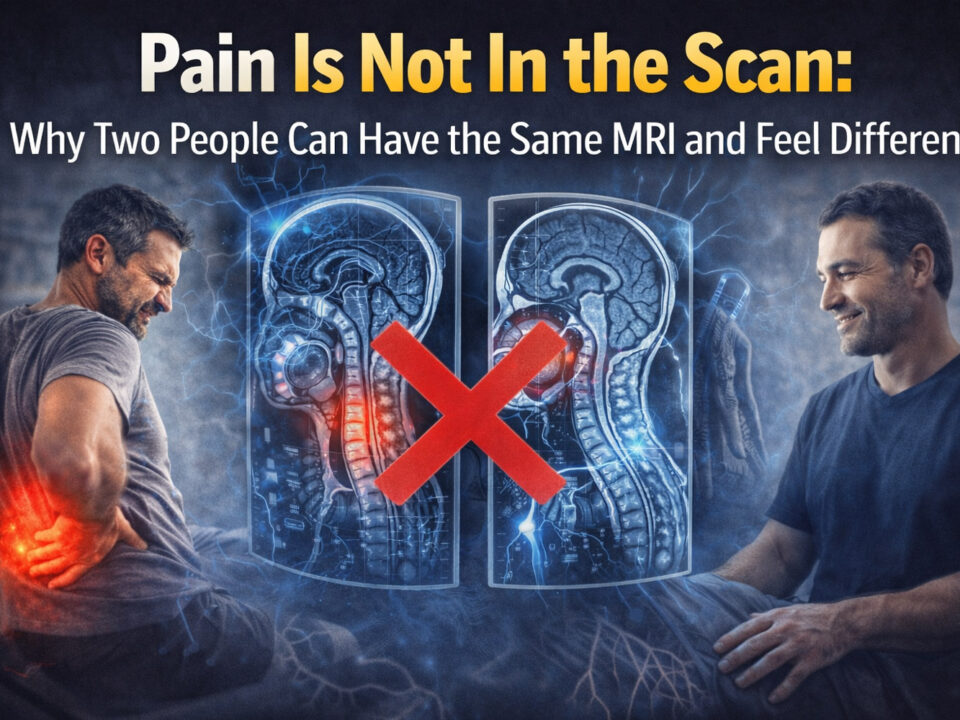
Pain is not just about damaged tissue. It’s about how your nervous system interprets threat.
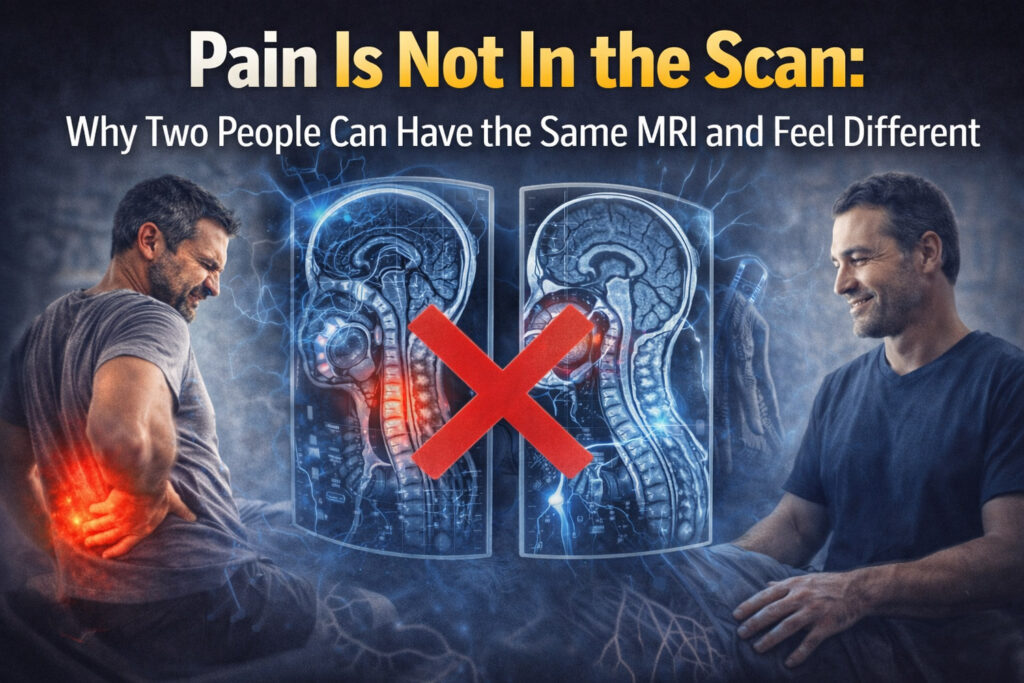
Two people can have the same scan, same tissue findings, same workload.
One is fine.
The other is cooked.
The difference is not the machine.
It’s the system.
When your nervous system is overloaded, stressed, under-recovered, or deconditioned, it becomes protective. Muscles tighten. Movement feels unsafe. Pain ramps up.
Machines do not retrain that system.
They just distract it for a bit.
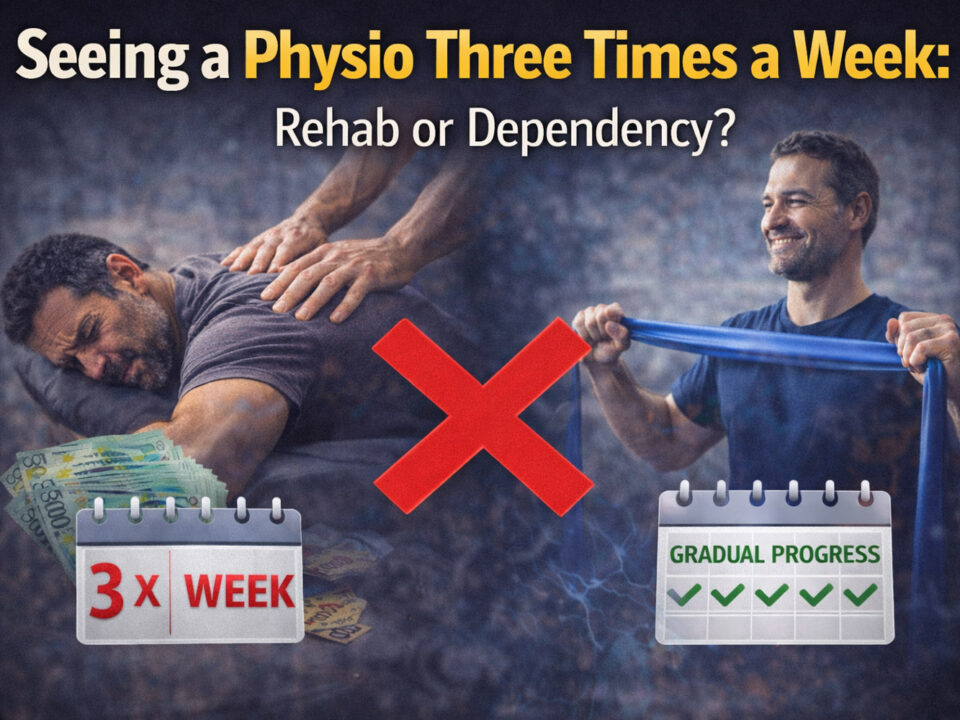
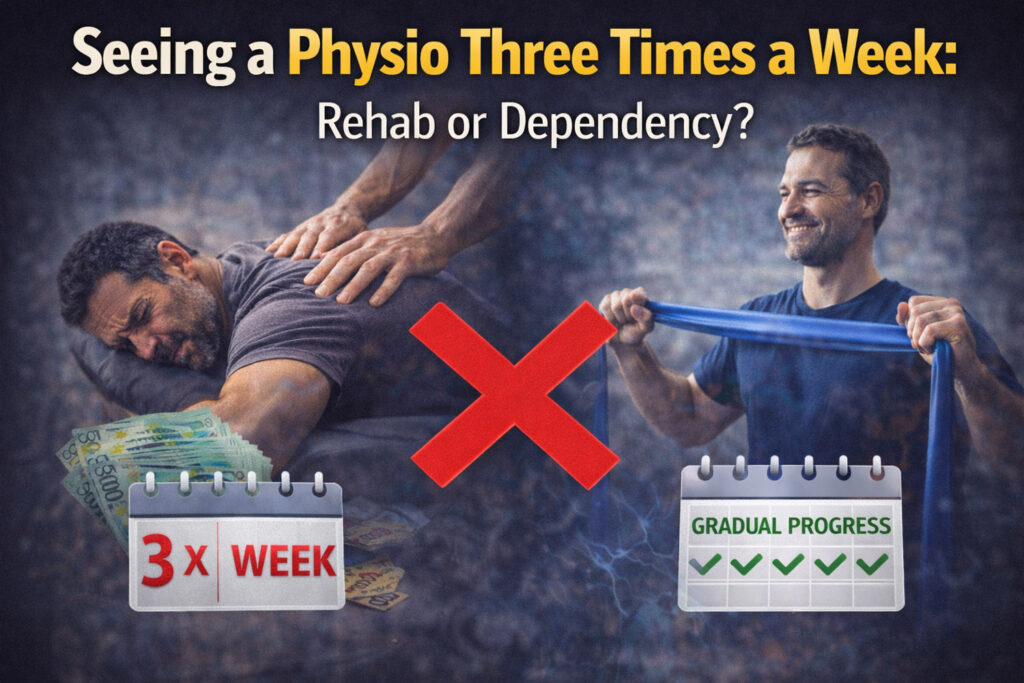
Why Passive Treatments Create Dependency
This is the part that rarely gets said out loud.
If your pain relief depends on lying still while a machine does something to you, then you’re training your body to believe it needs outside help to feel safe.
That’s how dependency forms.
You feel good during the session.
You feel flat a few hours later.
You book again.
Not because your body needs it, but because nothing else changed.
Real therapy should do the opposite.
It should make you less dependent, not more.
The Problem With “Doing Nothing” Therapy
Here’s the pattern that keeps people stuck.
Pain flares up.
They stop moving.
They lie down.
They get treated passively.
What happens next?
Strength drops.
Confidence drops.
Tolerance drops.
Now normal movements feel threatening. Pain increases. And suddenly everyday life feels harder than it should.
Machines fit perfectly into this loop because they don’t demand anything from you.
But your body adapts to what you ask of it.
And if you ask nothing, you lose capacity.
What Actually Changes Pain Long Term
If machines aren’t the answer, what is?
Three things, every time:
- Calming the nervous system
Not by distracting it, but by giving it safe, meaningful input. - Restoring movement confidence
So your body stops bracing and guarding everything. - Building load tolerance
So tissues and joints can handle real life again.
Hands-on therapy, movement, and education work together here. Not because they’re magic, but because they address the system that creates pain in the first place.
Why Hands-On Treatment Beats Machines
Human touch matters.
Not in a fluffy way. In a neurological way.
Hands-on treatment provides rich sensory input, real feedback to the brain, and context. It helps your nervous system understand that movement is safe again.
Machines are generic.
Hands are specific.
A machine doesn’t adapt to you.
A therapist does.
That difference matters more than most people realise.
Pain Relief vs Pain Resolution
This is the line that separates good therapy from expensive theatre.
Pain relief makes you feel better today.
Pain resolution changes how your body behaves tomorrow.
Machines mostly chase relief.
Real treatment chases resolution.
If you’ve been getting temporary relief for months with no change in your tolerance, strength, or confidence, that’s not bad luck. That’s the wrong strategy.
Why People Defend Machines So Hard
Because they’re easy.
For clinics, machines scale well.
For patients, machines feel passive and safe.
But safe doesn’t mean effective.
And effective doesn’t always feel comfortable at first.
Real rehab asks you to participate. To move. To rebuild trust in your body. To stop outsourcing responsibility to a device.
That’s harder. But it works.
Where Machines Do Fit
To be clear, machines aren’t evil.
They can help early on to reduce pain enough to allow movement.
They can assist in specific cases when used correctly.
The problem is when they become the main event instead of the support act.
If your entire plan revolves around lying there while something buzzes, nothing meaningful is changing.
A Final Reality Check
If machines fixed pain, Western Sydney would be pain-free by now.
Every clinic has them.
Every patient has tried them.
Yet people are still sore, still stiff, still stuck.
Pain changes when you change what your body can tolerate.
Not when a machine distracts it for 20 minutes.
Final Word
You don’t need more gadgets.
You don’t need stronger machines.
You don’t need another passive fix.
You need a body that feels safe moving again.
And that only happens when treatment does more than distract symptoms.
Relief fades.
Capacity sticks.
That’s the difference.