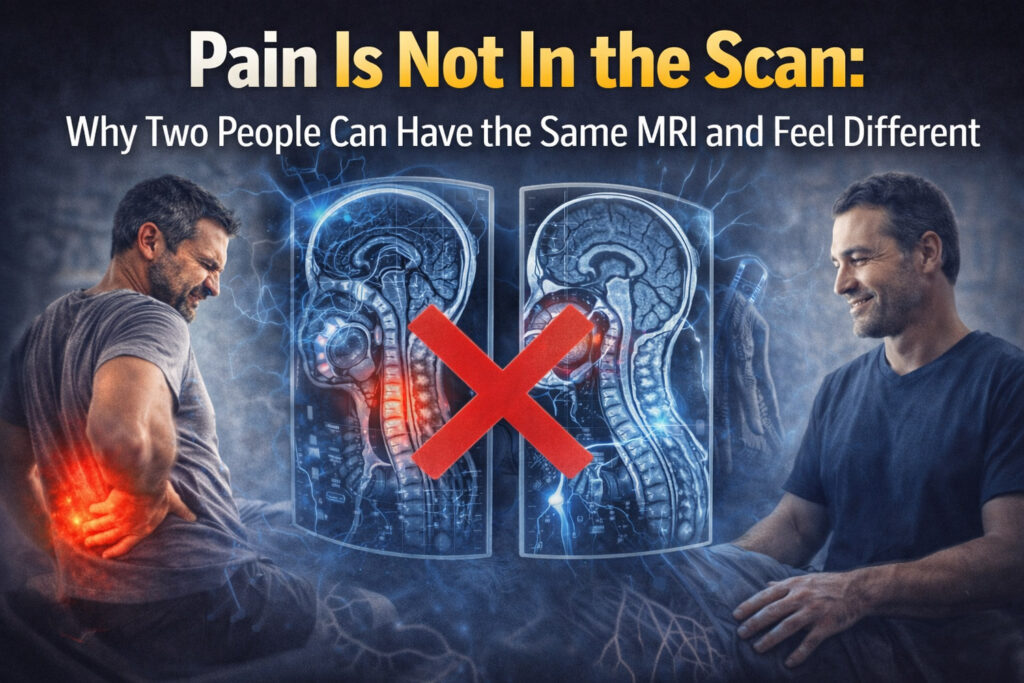
Pain Is Not in the Scan: Why Two People Can Have the Same MRI and Feel Totally Different
By Super Myo | Allied Health Professional & Manual Therapy Truth-Teller Who Keeps it Real!
Let’s clear something up that causes more fear, confusion, and unnecessary suffering than almost anything else in pain care.
Pain is not in the scan.
If it was, things would be simple. You’d get an MRI, point to the problem, fix the structure, and move on with your life. But that’s not how pain works. Not even close.
Every week I see people who walk in holding an MRI report like a verdict. Disc bulge. Degeneration. Arthritis. “Abnormal findings.” And they’re convinced they’re broken.
Here’s the problem.
Two people can have the exact same scan. One is in agony. The other feels nothing at all.
Same spine. Same bulge. Same wear and tear. Completely different experience.
So what’s actually going on?
Why Scans Don’t Explain Pain
MRI and imaging are brilliant tools. They show structure. They show anatomy. They show age-related changes. What they do not show is pain.
Pain is not a picture. Pain is an experience.
Scans can show:
- Disc bulges
- Joint degeneration
- Arthritis
- Wear and tear
But they cannot show:
- Sensitivity
- Threat perception
- Nervous system load
- Stress response
- Fear
- Sleep deprivation
- Previous injury history
- Emotional context
This is why relying on scans alone leads people down the wrong path.
If pain lived purely in damaged tissue, everyone with a disc bulge would be in agony. But that’s not reality. Research has shown that many adults have disc bulges and degeneration with no pain at all.
So when someone tells you, “Your scan explains everything,” they’re oversimplifying something that is far more complex.
Pain Lives in the Nervous System, Not the Picture
Pain is produced by your nervous system, not your spine, disc, or muscle.
Your brain’s job is to keep you alive. It constantly asks one question:
“Is this safe?”
When the answer is no, pain goes up.
When the answer is yes, pain goes down.
Your tissues send information. Your brain decides whether that information is dangerous. Pain is the output.
This is why:
- Pain can exist without damage
- Damage can exist without pain
- Pain can linger long after tissue healing
- Pain can flare up under stress, poor sleep, or fear
The scan might show a disc bulge, but the nervous system decides whether that bulge is a threat.
Same Scan, Different Life, Different Pain
Let’s take two people.
Person A:
- Sleeps well
- Trains regularly
- Feels confident in their body
- Has moved consistently for years
- Isn’t scared of their scan
Person B:
- Poor sleep
- High stress
- History of injury
- Avoids movement
- Was told their spine is fragile
- Feels anxious about bending, lifting, or twisting
Same MRI.
Very different nervous systems.
Person B’s system is on high alert. Everything feels threatening. Muscles guard harder. Movements feel unsafe. Pain ramps up.
This isn’t weakness. It’s biology.
Fear Is One of the Strongest Pain Amplifiers
Nothing ramps pain up faster than fear.
When someone reads an MRI report full of words like “degeneration,” “bulge,” or “wear and tear,” the brain doesn’t stay neutral. It goes into protection mode.
- Muscles tighten
- Movement becomes guarded
- Sensitivity increases
- Pain thresholds drop
Suddenly normal movements hurt. Not because the tissue is worse, but because the nervous system is on edge.
This is why people often feel worse after scans, not better.
The scan didn’t change their body. It changed their beliefs.
Why “Fixing the Structure” Often Fails
Many treatment models still chase structure.
Flatten the disc. Realign the spine. Correct posture. Strengthen one magic muscle.
Sometimes these things help. Often they don’t. And when they don’t, people blame themselves.
But the problem was never effort or compliance. The problem was a misunderstanding of pain.
If pain is driven by sensitivity and threat, then:
- Over-protecting tissue keeps pain alive
- Avoiding movement reinforces fear
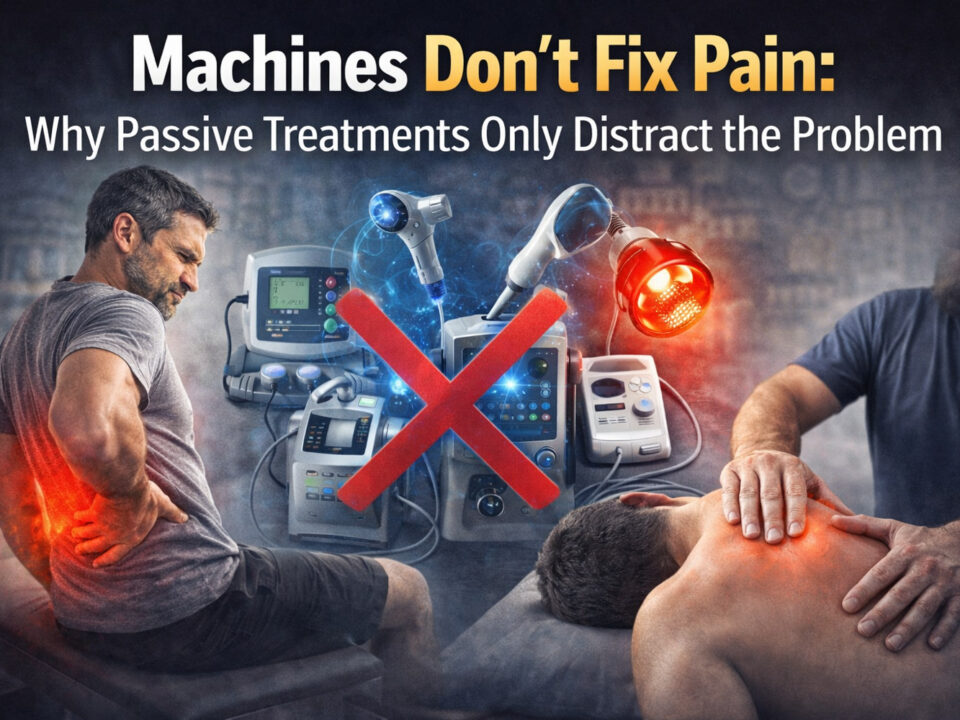
- Passive treatment alone never builds confidence
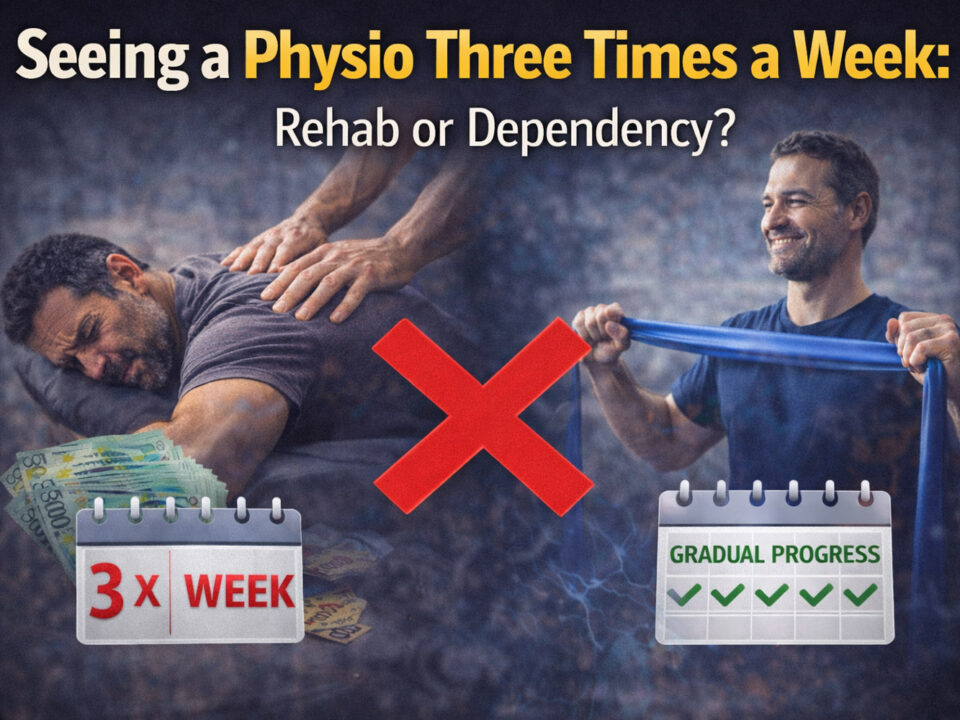
- Endless appointments create dependency, not resilience
Pain improves when the nervous system learns that movement is safe again.
What Actually Changes Pain Long-Term
Pain shifts when three things change:
1. Understanding
When people learn that their body is not broken, fear drops. Less fear often equals less pain.
2. Movement Confidence
Gradual, appropriate movement teaches the nervous system that load is safe. Pain stops being the warning signal for everything.
3. Nervous System Load
Sleep, stress, recovery, and life pressure all matter. A system under constant load is more sensitive. Reduce the load and pain often changes.
Manual therapy and sports therapy can help not because they “fix” tissue, but because they help reduce threat, improve movement quality, calm protective responses, and rebuild confidence.
If you want to see the hands-on treatments we use as part of myotherapy care, start here: Myotherapy Treatments in Penrith.
Why This Matters More Than Any Diagnosis
When pain is misunderstood, people:
- Avoid movement
- Lose strength
- Lose confidence
- Spiral into chronic pain
- Become dependent on treatment
- Live smaller lives than they should
When pain is understood properly, people:
- Move sooner
- Recover faster
- Train with confidence
- Stop catastrophising
- Regain control
The scan doesn’t define your future. Your nervous system does.
A Final Word from Super Myo
If you’ve been told your scan explains your pain, here’s the truth.
It explains part of the story. Not the whole thing.
Your body is not fragile. Your spine is not broken. Your pain is real, but it does not have to run your life.
Pain changes when understanding changes. Movement changes. Confidence changes.
And once that happens, the scan stops being the boss.
💻 Book here: https://supermyo.com.au/contact/
📱 Call or Text: 0490 196 815
📸 Instagram: @sup3r_myo
Frequently Asked Questions
Can an MRI show the exact cause of my pain?
It can show structural changes, but it cannot measure sensitivity, threat, stress load, or how your nervous system is processing movement. That’s why scans often do not match symptoms.
If my scan shows a disc bulge, does that mean I should avoid lifting?
Not automatically. Many people with disc bulges lift, work, and train without pain. What matters is building load tolerance and confidence with the right plan, not avoiding movement forever.
Why did my pain get worse after reading my MRI report?
Fear and uncertainty can increase threat in the nervous system. When the body feels unsafe, it guards more and pain can ramp up even if the tissue has not changed.
What should I do if I have pain but my scan is “normal”?
A normal scan does not mean your pain is imaginary. Pain can be driven by sensitivity, movement patterns, recovery, stress, and nervous system load. You still deserve proper assessment and a plan.