There Is No Perfect Posture and That’s the Truth
By Super Myo | Allied Health Professional & Manual Therapy Truth-Teller
If perfect posture actually existed, nobody would have back pain.
Your mum wouldn’t complain about her neck. Tradies wouldn’t have sore spines. Office workers wouldn’t stand up feeling like they are 80 years old. And physios wouldn’t be making half their income telling people to “sit up straight”.
But here we are.
Posture has been sold as the villain for decades, and it is one of the biggest distractions in pain management. People are walking around terrified of sitting “wrong”, scared to slouch, scared to relax, constantly correcting themselves like a robot that is about to malfunction.
That fear does more damage than the posture ever did.
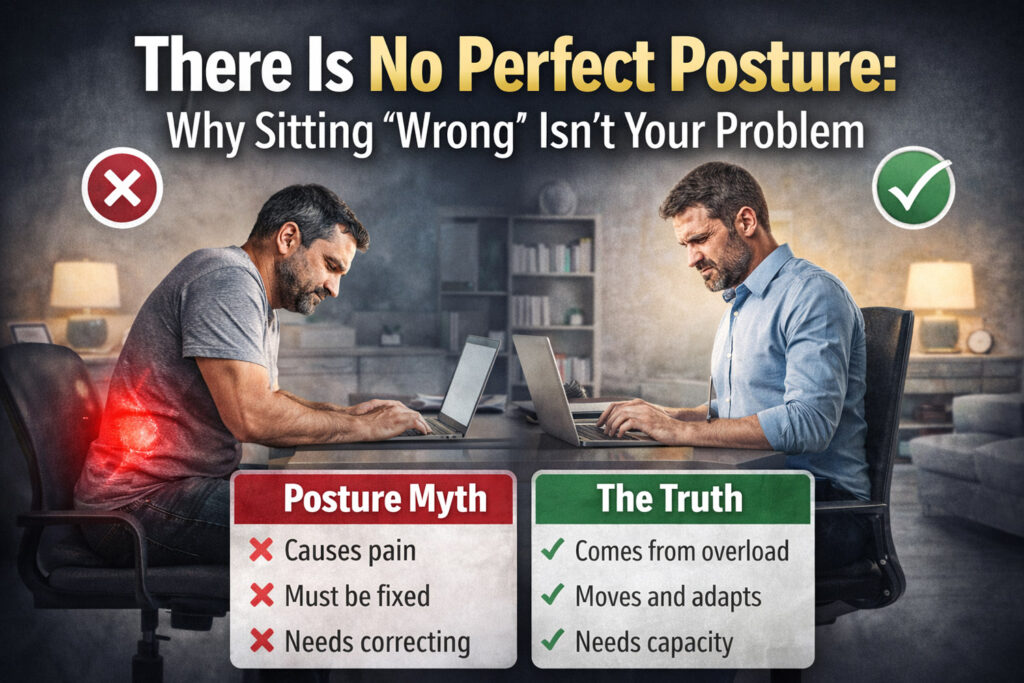
The truth is simple. There is no perfect posture. There are only positions you are strong in and positions you are not.
Pain does not come from sitting badly. Pain comes from being underprepared for the positions you spend your life in.
Where the Posture Myth Came From
Posture became a convenient story.
It is easy to explain. It is easy to sell. It gives people something visible to blame.
Round shoulders, forward head, slouched spine. Looks bad, must be bad, right?
Except the research does not support that idea. Studies consistently show weak or inconsistent links between posture and pain. Plenty of people sit “poorly” their entire lives with zero pain. Plenty of people sit “perfectly” and still hurt every day.
If posture caused pain, everyone with a desk job would be broken. They are not.
The real problem is not posture itself. It is capacity.
Your Body Adapts to What You Do Most
Your body is not fragile. It adapts relentlessly.
If you sit for long hours, your body adapts to sitting. If you stand all day, it adapts to standing. If you lift, twist, carry, bend, or repeat the same movements, your tissues adapt to those loads.
Pain shows up when the load exceeds what your system can handle.
This might happen because training increased too fast, stress went up without recovery, movement stopped for too long, or the nervous system is already overloaded.
None of that has anything to do with “bad posture”.
Sitting slouched is not dangerous. Sitting slouched for eight hours when your spine cannot tolerate it yet is.
Why Forcing “Good Posture” Often Makes Pain Worse
This is the part most people miss.
When you constantly correct your posture, you create tension. Tension feeds the nervous system. A sensitised nervous system amplifies pain.
People become rigid, braced, and over-controlled. They stop trusting their body. They stop relaxing. They stop breathing properly.
Now the muscles never get a break. Blood flow drops. Fatigue builds. Pain increases.
You can sit bolt upright with a neutral spine and still flare your back if your tissues are already overloaded.
Comfort is not the enemy. Weakness and overload are.
Pain Is Not a Structural Problem First
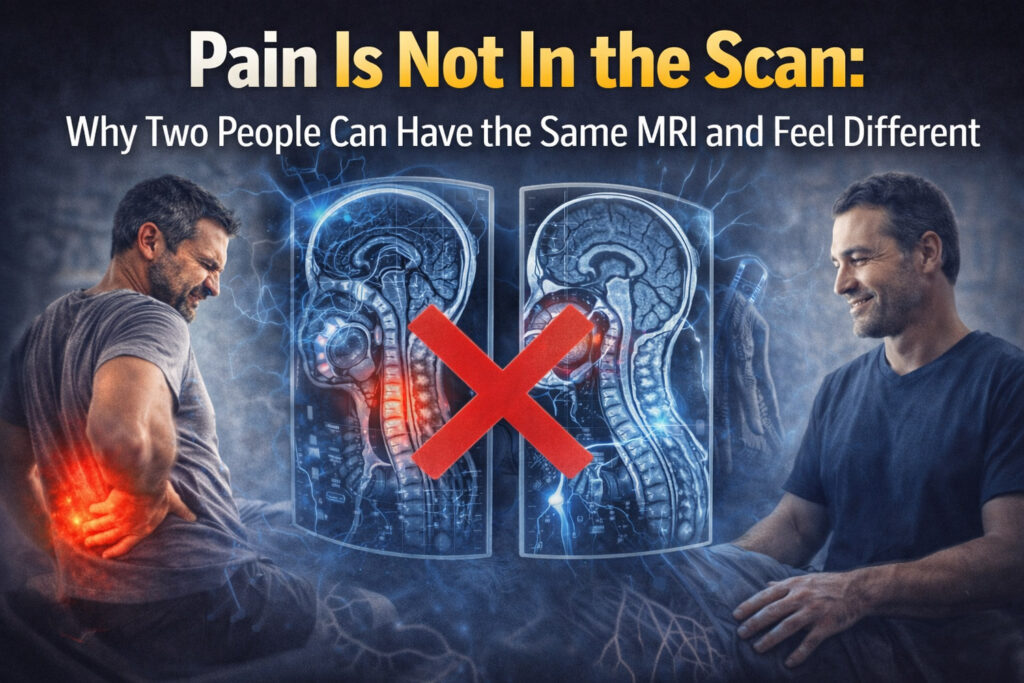
Two people can sit in the exact same position. One is fine. One is in agony.
Same posture. Different outcome.
Pain is not a posture problem. It is a system problem.
Pain is influenced by tissue tolerance, nervous system sensitivity, stress and sleep, past injuries, beliefs, and recovery capacity.
Posture is just the position your body happens to be in when those factors collide.
Why Movement Variety Beats “Perfect Alignment”
Your spine is not designed to stay neutral all day.
It is designed to move. To flex, extend, rotate, load, and unload.
Healthy spines tolerate variation, not perfection.
The most resilient bodies are not the ones that hold one ideal position. They are the ones that can move into many positions without panic or pain.
This is why people who fear bending often hurt more. They have trained their system to treat flexion as a threat.
The solution is not better posture. The solution is better tolerance.
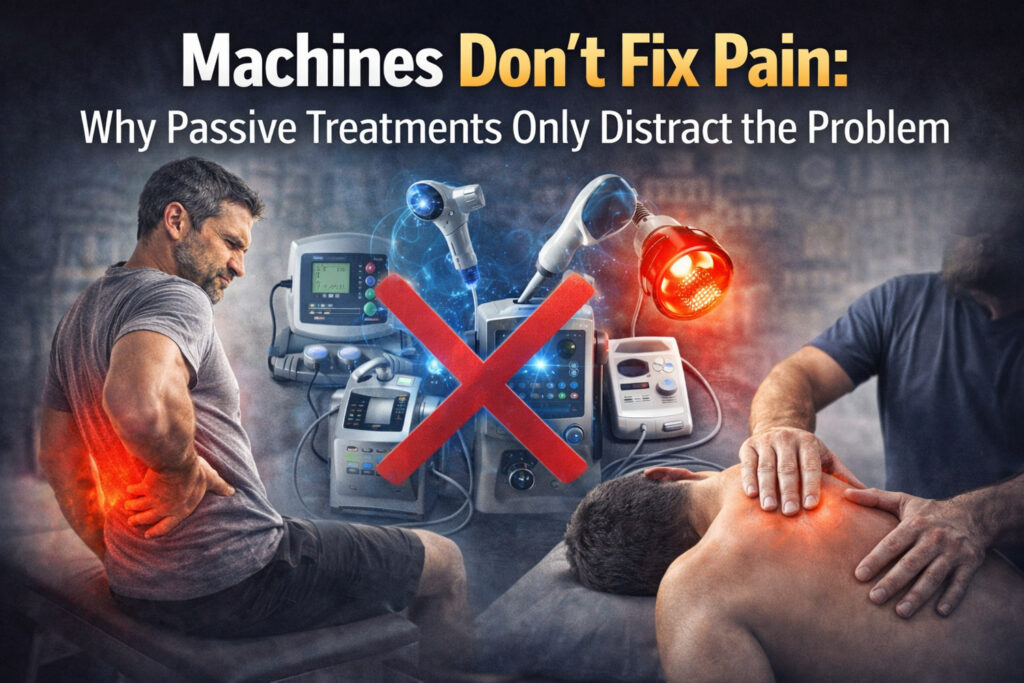
Why Massage Helps When Posture Advice Fails
Massage works because it changes how the nervous system interprets input.
It does not realign bones. It does not fix posture. It does not break knots.
It reduces sensitivity.
When muscle tone drops, blood flow improves. When blood flow improves, movement feels easier. When movement feels easier, the brain stops guarding.
That is physiology, not placebo.
A Final Word from Super Myo
There is no perfect posture. There never was.
Your body is not broken because you slouch. Your spine is not fragile because you sit. Pain is not a sign that something is out of place.
Pain is a signal that your system needs support, capacity, and confidence again.
Stop chasing perfect alignment. Start building a body that can handle real life.
That is how people actually get better.