
Disc Bulges and Back Pain: What MRI Scans Can and Can’t Tell You
By Super Myo | Allied Health Professional & Manual Therapy Truth-Teller Who Keeps it Real!
Let’s Clear This Up Properly
If you’re over 30 and you’ve had an MRI, there’s a very good chance it showed a disc bulge.
And if someone told you that means your back is cooked, fragile, or “degenerating”, you were sold fear, not facts.
A disc bulge does not mean you are broken. It means you have lived a life.
You’ve worked, trained, lifted kids, lifted groceries, sat in cars, slept awkwardly, bent over sinks, maybe played sport, maybe not. Your spine adapted to load, just like every other structure in the body does.
The problem is not the disc bulge. The problem is what people are told about it.
What a Disc Bulge Actually Is
Your spine is made up of vertebrae with discs between them. Those discs act like shock absorbers. Over time, with normal use, they change shape slightly. Sometimes they bulge. Sometimes they flatten. Sometimes they dry out a bit.
That is not injury. That is ageing and adaptation.
A disc bulge simply means the outer fibres of the disc have pushed out a little beyond where they used to sit. That is all.
No explosion. No slip. No ticking time bomb.
Yet the language used around scans makes people feel like their spine is one wrong move away from disaster.
That fear changes everything.
The Scan Is Not the Pain
Here’s the part most people never hear.
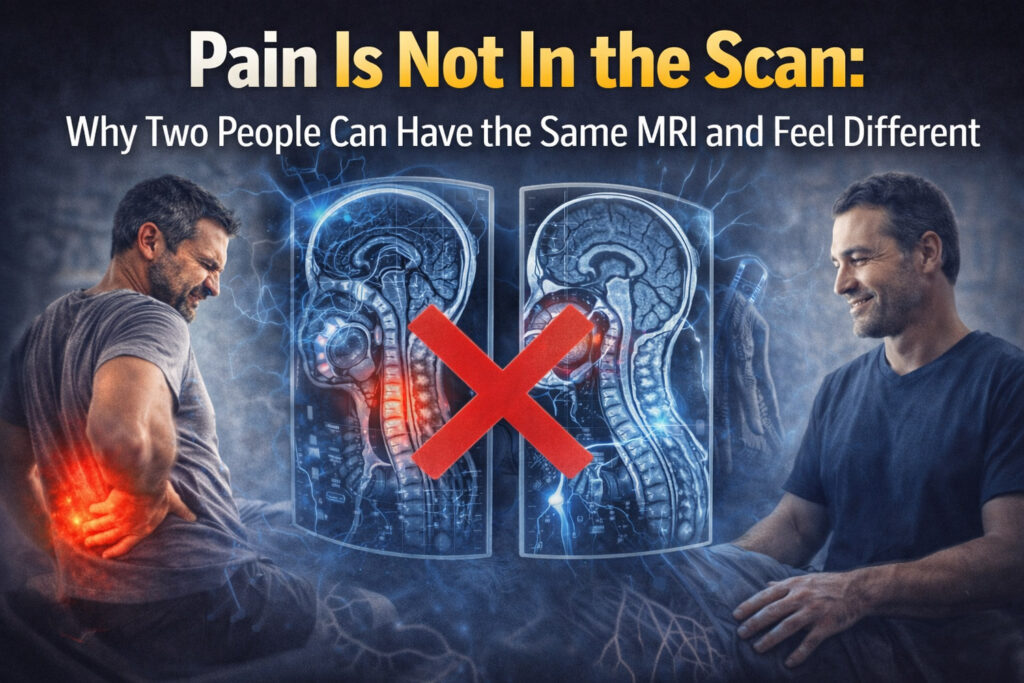
Large MRI studies show that a huge percentage of people with disc bulges have no pain at all. None. Zero.
Two people can have the same scan. One is lifting weights, working full time, and living normally. The other is terrified to bend over.
Same spine. Different outcome.
That alone tells you the scan is not the cause of pain.
Pain is an output of the nervous system, not a photograph of tissue.
Your MRI shows structure. It does not show sensitivity, stress, sleep deprivation, fear, workload, or how safe your nervous system feels in your body.
How Fear Turns a Normal Finding Into Ongoing Pain
When someone is told “you’ve got a disc bulge”, what they usually hear is: your back is weak, your spine is damaged, you need to protect it forever.
From that moment on, the nervous system goes into protection mode.
Movements become guarded. Muscles tighten. Breathing changes. Load tolerance drops. Confidence disappears.
You stop trusting your body.
The spine is not actually fragile, but it is now being treated like it is. And the nervous system responds exactly how it should when it thinks there is danger.
Pain increases, not because the disc is worsening, but because the system is on high alert.
Why Rest Usually Makes Disc Pain Worse
This is where things spiral.
You are told to rest. So you move less. You get weaker, stiffer, more sensitive. Then when you try to move again, it hurts more.
That pain reinforces the belief that your back is damaged.
So you rest again.
This cycle has nothing to do with disc shape and everything to do with deconditioning and nervous system sensitivity.
Spines thrive on movement. They are built for load. They get healthier when exposed to appropriate stress.
Avoiding movement does not protect a disc bulge. It trains your system to fear movement.
Disc Bulges and “Wear and Tear”
Another phrase that does real damage.
Wear and tear sounds like decay, like rust, like something falling apart.
In reality, what we see on scans is normal age-related change, similar to wrinkles on skin or grey hairs.
Your discs do not suddenly fail because you bent the wrong way. They respond to cumulative load over years. And even then, they are incredibly resilient.
Your spine is not a glass structure. It is a load-bearing system designed to bend, twist, compress, and adapt.
The issue is not that your spine cannot handle load. It is that your current capacity does not match the demands being placed on it.
That is a trainable problem.
Why Pain Can Persist Long After “Healing”
This is where people get stuck.
The disc settles. The tissues calm. The scan findings remain the same. But the pain continues.
Why?
Because pain is no longer being driven by tissue damage. It is being driven by a sensitised nervous system.
Stress, poor sleep, constant vigilance, lack of confidence, and reduced movement all keep the system wound up.
Your back is not injured anymore, but your nervous system is still acting like it is.
This is why chasing structure alone does not fix chronic back pain.
What Actually Helps Disc-Related Back Pain
Not gimmicks. Not fear. Not endless rest.
What helps is restoring confidence, movement, and capacity in a system that has been guarding for too long.
That means helping the nervous system calm down so muscles stop bracing constantly, restoring movement gradually so the spine relearns safety, building strength and tolerance so load no longer feels threatening, and educating properly so fear stops driving pain.
Hands-on therapy can help settle the system and improve movement quality. Guided rehab helps rebuild trust and capacity. Education removes the threat narrative that keeps people stuck.
None of that requires “fixing” a disc bulge.
It requires treating the person, not the picture.
Why Many People Are Still Told the Wrong Story
Because fear sells.
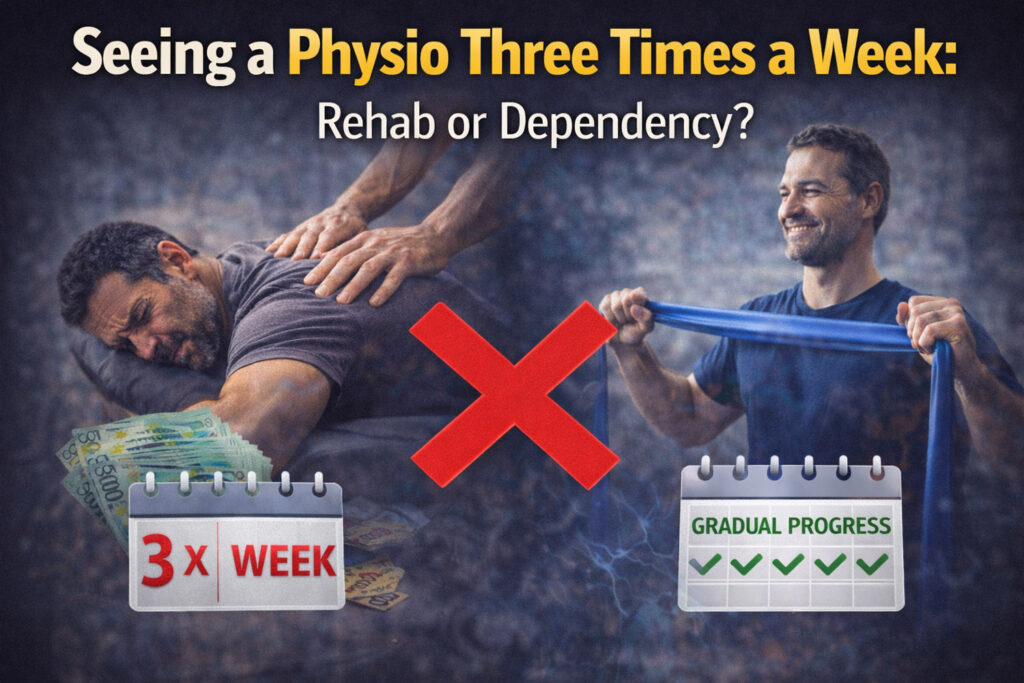
If you believe your back is broken, you will keep coming back. You will avoid independence. You will hand over control.
That is not healthcare. That is dependency.
Real therapy should move you towards understanding, confidence, and self-reliance, not permanent fragility.
The Big Truth About Disc Bulges
Most disc bulges are normal, common, not dangerous, and not the reason you are still in pain.
Your spine is strong. It just needs the right input to remember it.
Once fear drops, movement returns. Once movement returns, pain often follows it out the door.
A Final Word from Super Myo
If your scan scared you, that does not mean something is wrong with you. It means you were given information without context.
A disc bulge is not a diagnosis. It is a description.
You are not broken. You are not fragile. And you do not need to live cautiously forever.
Your spine is adaptable. Your nervous system is trainable. And pain is changeable when you stop feeding it fear.
Stop letting a scan define you. Start rebuilding trust in your body.
That is where real recovery starts.
FAQs
Do disc bulges always cause pain?
No. Many people have disc bulges on scans and feel no pain at all.
Should I stop exercising if I have a disc bulge?
Not usually. Most people improve with smart movement and gradually rebuilt capacity, rather than complete rest.
Can a disc bulge heal?
Symptoms often settle and movement improves, but the goal is not chasing a perfect scan. It is restoring confidence, function, and tolerance to load.
What should I do if my MRI report scared me?
Get proper context from a clinician who explains the findings clearly and builds a plan around your symptoms, movement, and goals.
Is hands-on therapy useful for disc pain?
It can help reduce guarding, improve movement, and calm the nervous system, especially when combined with guided exercise and education.