How Cortisol Affects Athletic Performance and Recovery: The Truth You’re Not Being Told
By Super Myo | Allied Health Professional and Manual Therapy Truth-Teller
What Cortisol Actually Is and Why You Need It
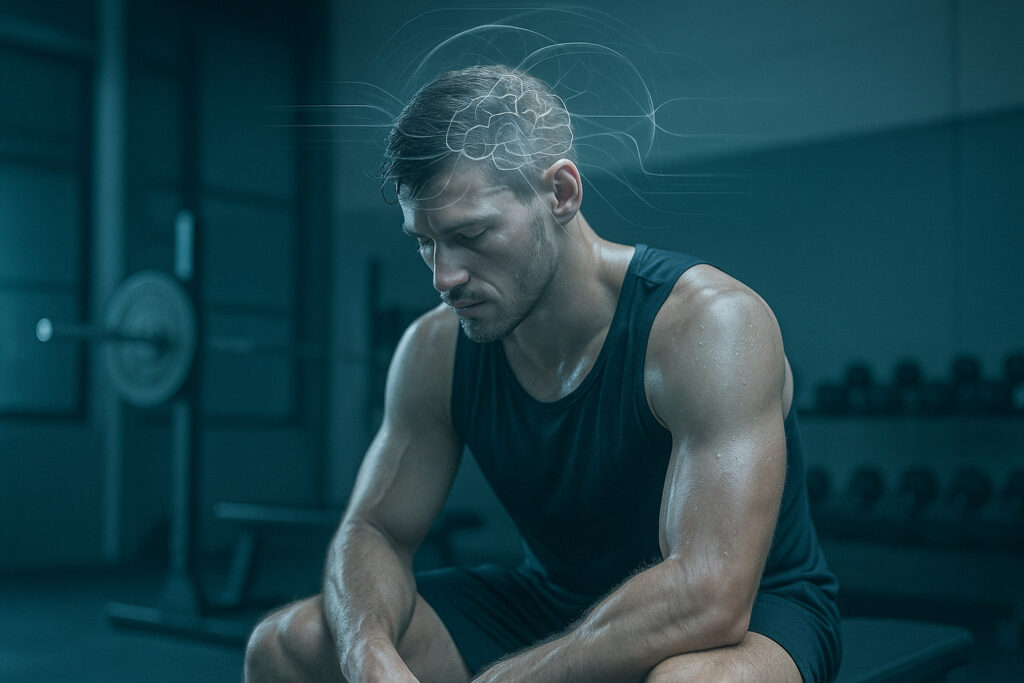
Cortisol is your body’s primary stress hormone. It is released by the adrenal glands in response to anything your brain sees as pressure. It is useful in the short term because it increases alertness, releases energy, and helps you deal with threats.
The issue is simple. When cortisol stays high for too long, your body stops recovering properly. You feel tired but wired, your sleep gets disrupted, soreness lasts longer, and training feels harder than it should. You can do everything right and still feel stuck if cortisol is slowing you down.
Symptoms of Chronically High Cortisol
- Persistent tightness in the traps, neck, or lower back
- Poor sleep and waking up tired
- Fatigue that feels more mental than physical
- Soreness that lingers longer than usual
- Increased irritability and stress
- Higher pain sensitivity
- Slower strength gains
- Reduced motivation
- More frequent niggles and injuries
These are not signs of weakness. They are signs your system is stuck in fight or flight mode.
How Cortisol Slows Muscle Recovery
Recovery is simple on paper: stress plus rest equals adaptation. Cortisol interferes with the “rest” part by:
- Increasing muscle breakdown: High cortisol accelerates protein breakdown, making recovery slower.
- Reducing collagen synthesis: Tendons and ligaments repair more slowly.
- Disrupting deep sleep: Deep sleep is where most recovery happens, and cortisol blunts this cycle.
- Keeping muscles guarded: Stress triggers muscle tension, limiting movement and recovery.
Research supports this. A review in the Journal of Strength and Conditioning Research found that elevated cortisol impairs recovery and training adaptations (Crewther et al., 2011, DOI: 10.1519/JSC.0b013e3181f00f93).
How Cortisol Affects Performance
Chronically high cortisol impacts performance in multiple ways:
- Slower strength and muscle gain
- Decreased coordination
- Increased fatigue
- Lower aerobic efficiency
- Reduced motivation
- Heightened pain sensitivity
This is why athletes can train consistently yet feel like they are going backwards.
How Sports Therapy Massage Lowers Cortisol
Sports therapy massage is not pampering. It is nervous system regulation.
A 2020 meta-analysis in BMJ Open found that massage significantly reduces cortisol while improving serotonin and dopamine (Moyer et al., DOI: 10.1136/bmjopen-2019-031899). Another study in the International Journal of Neuroscience reported up to a 31 percent reduction in cortisol after massage (Field et al., 2005, DOI: 10.1080/00207450590956459).
In practice, this means:
- Muscles relax faster
- Pain sensitivity decreases
- Recovery accelerates
- Deep sleep improves
- Movement becomes smoother
- Niggles settle instead of lingering
What Sports Therapy Actually Does for Stress
- Shifts the nervous system from fight or flight into rest and digest
- Allows guarded muscles to release
- Improves circulation for faster tissue healing
- Reduces pain by calming neural input
- Makes your body trainable again
This is why hands-on therapy is so important for athletes and stressed people. It restores your ability to recover.
Is Cortisol the Reason You’re Not Recovering?
Ask yourself:
- Do I wake up tired even with a full night’s sleep?
- Do I feel wired at night?
- Do I feel tight everywhere with no clear reason?
- Do small things annoy me more than they should?
- Do I recover slower than everyone else?
- Do I get niggles frequently?
If you answered yes to two or more, stress and cortisol are likely part of the problem.
How SM Therapy Helps
At SM Therapy, sessions are built to calm your system, unload tense tissues, and restore efficient movement. You get proper hands-on work, targeted mobility, and clear guidance so cortisol stops hijacking your results.
No scripts, no gimmicks. Just treatment that respects how the body works.
A Final Word from Super Myo
Most people think their problems are physical. Tight muscles, weak glutes, stiff joints. But the truth is deeper — if your nervous system is overwhelmed, nothing changes.
Lower the cortisol, calm the system, and recovery finally happens the way it should.
📍 St Marys
💻 Book now: supermyo.com.au/contact
📱 0490 196 815
📸 Instagram: @sup3r_myo
Frequently Asked Questions
Does sports therapy massage actually lower cortisol?
Yes. Multiple studies show massage reduces cortisol and improves relaxation chemicals like serotonin and dopamine.
Can stress really cause physical pain?
Absolutely. Chronic stress heightens pain sensitivity and increases muscular tension.
How often should I book a session?
Every two to four weeks works well. Weekly sessions help athletes in heavy training blocks.
Can lowering cortisol improve performance?
Yes. When your system calms down, strength, mobility, and recovery improve noticeably.