Shoulder Pain Relief in St Marys: Sports Therapy That Actually Works
By Super Myo | Allied Health Professional and Manual Therapy Truth Teller Who Keeps it Real!
Shoulder pain starts small. A pinch here. A weird ache there. A little stiffness at the end of the day. Then one morning you go to reach overhead, or grab something behind the back, and the shoulder feels tight, weak, or flat-out angry.
Most people ignore it. They stretch randomly. They rest for a few days and jump straight back into the same movements. They roll a lacrosse ball over the sore spot, hoping it will magically reset the joint.
It never does.
Shoulder pain rarely fixes itself because the shoulder is the most complex joint in the body. When one part of the system goes off, the entire chain pays for it.
Let’s break down why shoulder pain begins, why it lingers for months, and how proper sports therapy actually fixes it.
Why Shoulder Pain Happens in the First Place
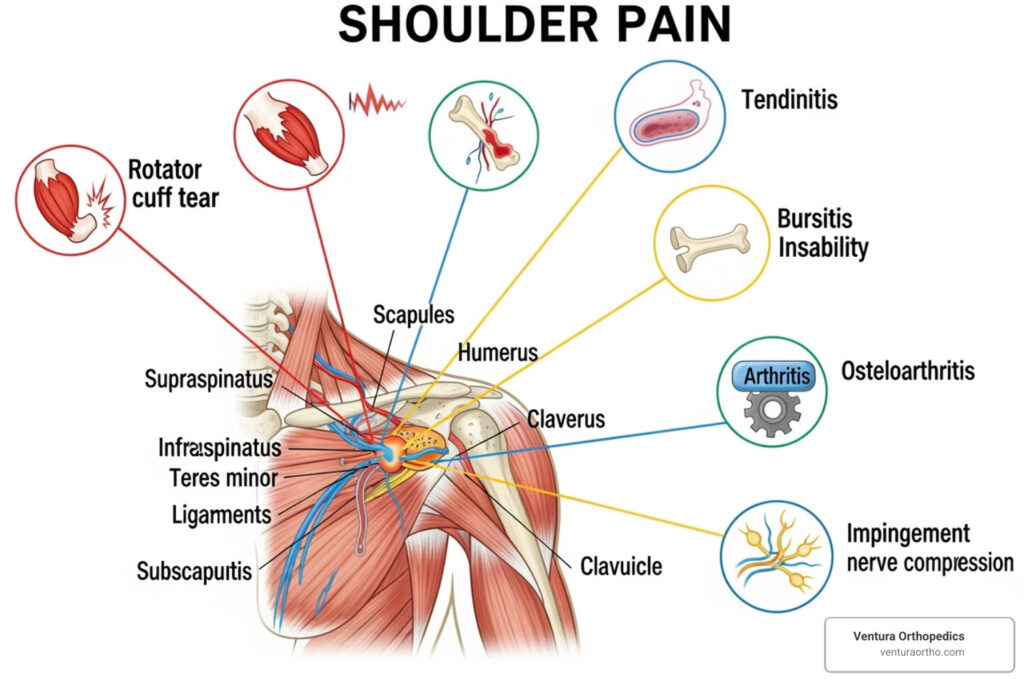
The shoulder relies on a team: the rotator cuff, scapular stabilisers, thoracic spine, neck, and ribcage. If even one of these stops doing its job, the shoulder becomes overloaded.
Two patterns cause most shoulder issues.
1. Overload and Irritation
Repeated pressing, pulling, or overhead work loads tendons and soft tissues day after day. Eventually the rotator cuff becomes irritated, the bursa inflames, and the shoulder blade stops gliding how it should.
This is why shoulder pain often shows up during bench press, shoulder press, or dips.
2. Poor Movement Mechanics
A stiff upper back or underperforming shoulder blade changes the way the shoulder moves. When the scapula no longer rotates or tilts properly, the rotator cuff gets compressed.
This is when people feel that classic top-of-shoulder pinch.
Old injuries also play a role. Even if the pain went away months ago, the body often keeps a protective pattern that compresses the joint and limits movement. Pain returns because nothing was ever reset properly.
A 2022 review in the Journal of Orthopaedic and Sports Physical Therapy highlighted that persistent shoulder pain often comes from overloaded tendons combined with poor scapular control. Put simply: too much load and not enough stability equals irritation.
Why Shoulder Pain Does Not Just Go Away
Shoulders do not settle when the same pattern that caused the pain is still there.
Muscles around the joint tighten to guard. The nervous system becomes sensitive to certain movements. Tendons stay irritated because they never get a break from the faulty mechanics that overloaded them in the first place.
This is why advice like “just strengthen it” or “do these three band exercises” rarely works.
You cannot strengthen your way out of irritation. You must calm the irritation first.
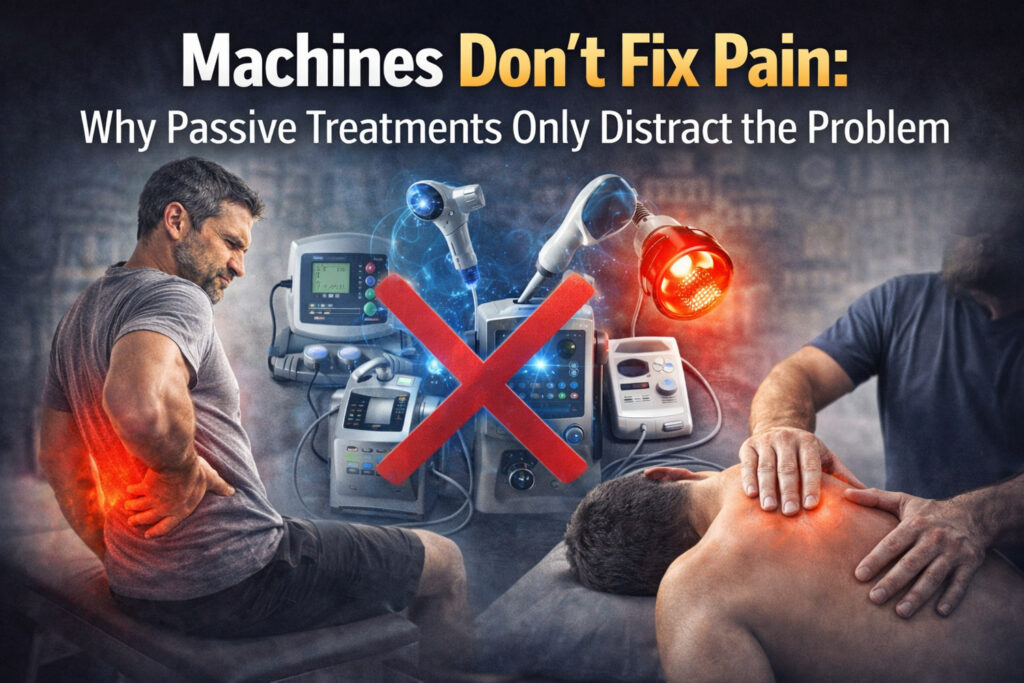
Most treatment fails because it treats the sore spot instead of the system. A rub over the deltoid feels nice but does nothing for the shoulder blade or upper back that are actually causing the issue.
How Sports Therapy Actually Fixes Shoulder Pain
Good shoulder treatment follows a clear sequence. Calm the irritation, restore movement, then rebuild strength.
Hands-on therapy is the first step. When someone comes in with a shoulder that feels sharp or locked, the priority is reducing tension and sensitivity. Dry needling releases protective spasms. Joint mobilisation frees up the gliding surfaces. Soft tissue work reduces guarding.
This is where people stand up after their session and say:
“Wait… I can actually lift my arm again.”
That is what happens when you reset the system.
Once movement improves, the next stage is restoring mechanics around the shoulder blade. The scapula must sit and move properly for the rotator cuff to work. You regain strength and control by activating the serratus anterior, lower traps, and the deeper stabilisers that most people never train.
Then comes load. Not random strengthening, targeted strengthening. The exercises chosen match the exact pattern that caused your pain.
Mobility of the thoracic spine and neck is addressed too. Many shoulder issues clear up the moment these regions start moving again.
The Most Common Shoulder Issues We Treat
Rotator Cuff Irritation
Sharp, top-of-shoulder pain with lifting the arm. This responds extremely well to hands-on treatment and scapular control work.
Biceps Tendinopathy
Front-of-shoulder pain during pressing or lowering weights. Common in gym-goers who overload anterior structures.
Shoulder Bursitis
Deep aching pain with overhead movement and sleeping. This improves quickly once inflammation is reduced and mechanics are restored.
Neck Related Shoulder Pain
Feels like the shoulder is the problem, but the irritation comes from the neck. Hands-on treatment provides quick relief.
These respond best to a combination of manual therapy and movement rehabilitation.
Research Backed Evidence
A review in BMJ Open Sport and Exercise Medicine found that manual therapy paired with progressive strengthening reduces pain and improves shoulder function significantly more than strengthening alone.
This supports what we see in clinic daily. Calm the tissue first, rebuild the pattern second.
A Better Way Forward
Shoulder pain becomes chronic when nobody addresses the system. When you treat the shoulder, the neck, the thoracic spine, and the scapula together, it resolves far faster.
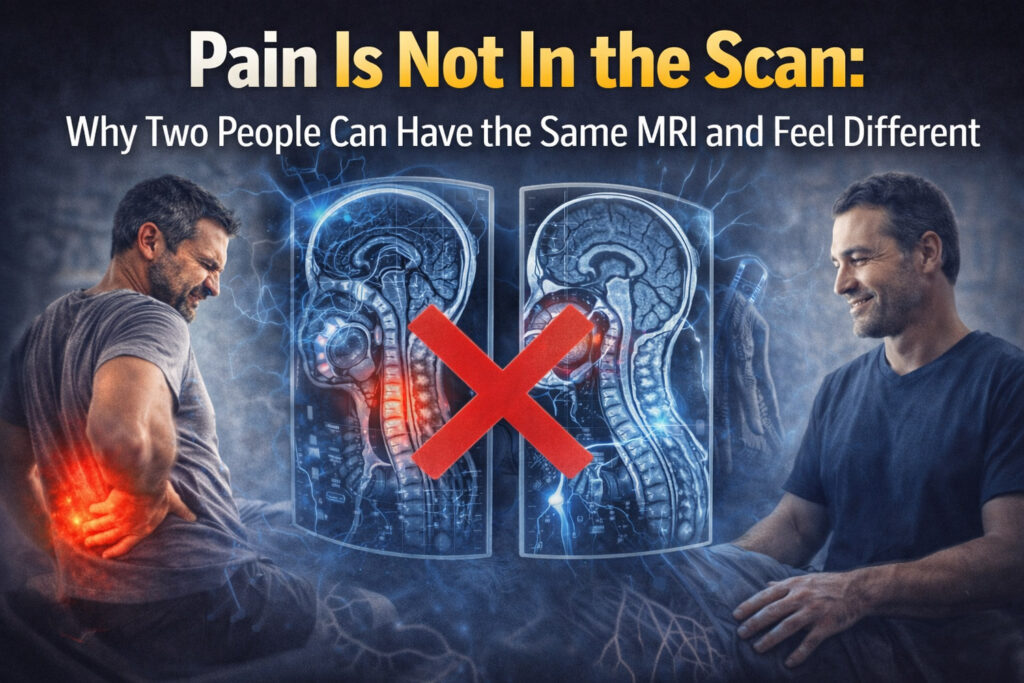
You do not need twelve rehab exercises. You do not need months of band work. You do not need a scan unless there are red flags.
You need someone who knows exactly what to look for and how to fix the pattern.
A Final Word from Super Myo
Your shoulder is meant to move, not punish you every time you lift your arm.
If you are sick of the pinch, the ache, or the stiffness, come in and let us fix it properly.
📍 52 Harris St, St Marys
📱 Call or Text: 0490 196 815
📸 Instagram: @sup3r_myo
Let us get your shoulder back to normal.
FAQ: Shoulder Pain Relief and Sports Therapy
How long until shoulder pain improves?
Most people feel relief after their first session, with full improvement coming over several targeted treatments.
Do I need scans first?
No. Most shoulder issues are mechanical and respond well to treatment without imaging, unless serious symptoms or red flags are present.
Is shoulder pain treatable even if it has been around for years?
Yes. Long-term pain usually means long-term compensation. When you fix the pattern and restore proper movement, the pain often changes quickly.