Shoulder Pain Relief in St Marys: Sports Therapy for Everyday People
By Super Myo | Allied Health Professional & Manual Therapy Truth-Teller Who Keeps it Real!
Understanding Shoulder Pain: Why It Happens to More Than Just Gym Rats
Shoulder pain isn’t reserved for lifters chasing PBs or tradies throwing ladders around — it hits just as hard for everyday people. Whether you’re reaching up to grab a cup, carrying kids, sitting at a desk, or driving for hours, the shoulder’s constant workload adds up fast.
The shoulder is the most mobile joint in the body, but that freedom comes at a cost: stability. With more than a dozen muscles controlling movement and posture, any imbalance or stiffness elsewhere — especially through the neck, mid-back, or ribs — can tip it into pain.
The most common culprits? Tight pecs, weak rotator cuff muscles, poor scapular control, and limited thoracic mobility. Over time, these imbalances lead to irritation, inflammation, and that familiar catch or ache when you reach overhead.
For athletes, it’s the difference between another set of bench press and another week off. For everyone else, it’s the difference between feeling capable and feeling constantly held back.
Why Shoulder Pain Sticks Around
Pain often outlasts the original issue. That’s because your body learns to guard — muscles stay switched on, the nervous system stays alert, and simple movements start to feel unsafe. You stretch, you roll, you rest, and yet… the tension keeps returning.
The reason? Most treatments chase symptoms, not causes. They focus on the sore area but ignore the movement pattern that made it sore in the first place. That’s where sports therapy changes the game.
Sports therapy looks beyond the joint — it assesses how your entire chain moves. It finds out why that shoulder is picking up extra work, and it helps your body remember how to move without pain again.
How Sports Therapy Helps Shoulder Pain
A proper sports therapy session for shoulder pain isn’t about lying still while someone rubs the sore spot. It’s an active, structured process that combines assessment, treatment, and retraining.
- Assessment: Finding what’s overloaded, underused, or restricted — often the issue isn’t the shoulder itself.
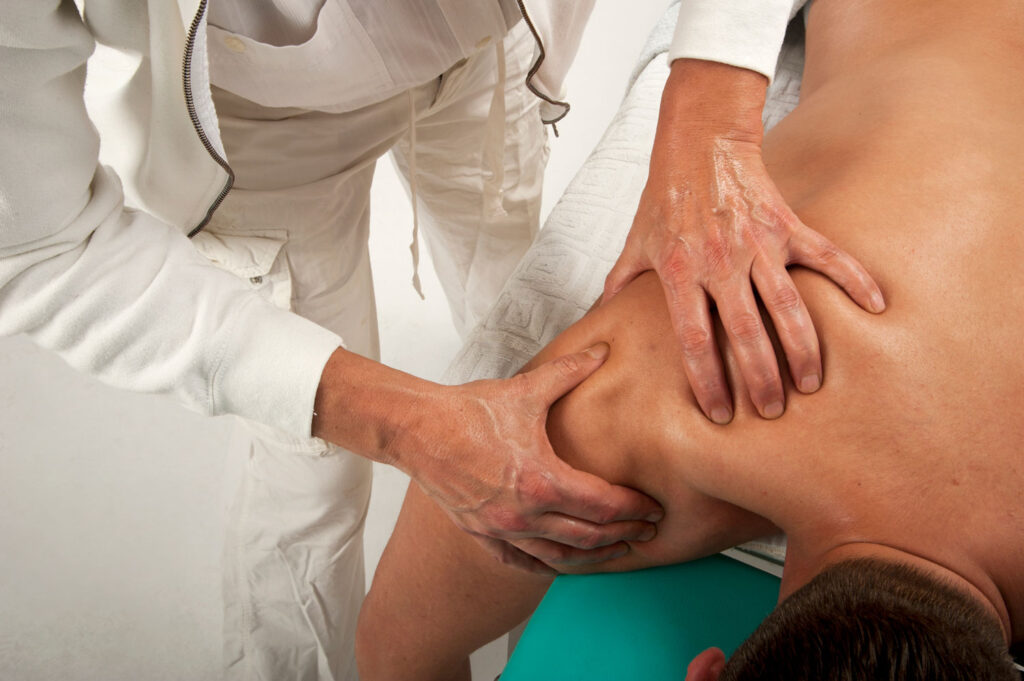
- Hands-On Treatment: Techniques like manual therapy, trigger point work, and dry needling to calm the nervous system and release guarded muscles.
- Movement Integration: Restoring joint mobility and retraining coordination between the shoulder, scapula, and spine.
- Rehab & Education: Reinforcing correct patterns so pain doesn’t return the second you pick up a dumbbell or reach for a shelf.
The result isn’t just relief — it’s control. You learn how your body should move again and how to keep it that way.
What the Research Says
Strong evidence supports manual and exercise-based therapy for shoulder pain. A 2020 review in the Journal of Orthopaedic & Sports Physical Therapy found that a combined approach of manual therapy plus targeted exercise significantly improved pain and function in people with rotator cuff–related shoulder pain — outperforming passive modalities and general rest (JOSPT, 2020).
In plain English: when you treat the whole movement, not just the symptom, the results last longer.
The Practical Payoff
The payoff from proper shoulder therapy isn’t just less pain — it’s better living. You stop avoiding movements, stop fearing workouts, and stop icing the same spot after every long day.
- Confidence in movement: lifting, carrying, and training without hesitation.
- Posture: your neck and upper back relax, letting you breathe and stand taller.
- Sleep: fewer night-time aches from lying on the wrong side.
- Energy: no more mental drain from chronic tightness and pain.
That’s what real recovery feels like — not just less sore, but more capable.
Why It Matters Day-to-Day
For athletes, a calm, stable shoulder means one thing: consistency. You can keep training, keep competing, and keep improving without breaks.
For everyone else, it’s about freedom — washing your hair, driving, working, or just living without that sharp, nagging reminder every time you move your arm.
Pain management isn’t about coping. It’s about changing how your body handles load, stress, and recovery. That’s exactly what sports therapy does best.
The SM Therapy Difference
At SM Therapy in St Marys, shoulder pain treatment isn’t a one-size-fits-all routine. Every session is built around your body, your job, your sport, and your habits.
Anton’s approach combines hands-on work, movement retraining, and education — so you leave not just feeling better, but knowing why you feel better.
Athletes from Minchinbury to Werrington, tradies from Rooty Hill, and desk-bound locals from Colyton all come in for the same reason — because real results speak louder than marketing.
If your shoulder’s been holding you back, it’s time to fix it properly.
A Final Word from Super Myo
Shoulder pain doesn’t need to become your new normal. The fix isn’t another stretch or another rest week — it’s movement done right, guided by someone who understands how your body’s built to perform.
📍 Located in St Marys, serving Western Sydney locals from Penrith, Minchinbury, Colyton & beyond.
💻 Book now at supermyo.com.au/contact
📱 Call or Text: 0490 196 815
📸 Instagram: @sup3r_myo
Because you don’t have to live with shoulder pain — you just have to stop ignoring it.
Frequently Asked Questions About Shoulder Pain & Sports Therapy
How long does it take for sports therapy to fix shoulder pain?
Most people feel a noticeable difference after their first session, but lasting relief usually takes 2–4 consistent visits depending on severity.
Is sports therapy safe for rotator cuff injuries?
Yes — when guided by a qualified Myotherapist. The treatment focuses on restoring movement and stability without aggravating tissue.
Can shoulder pain come from posture?
Absolutely. Poor posture can overload the shoulder and upper back muscles, which is why manual therapy that restores movement is so effective.
Do I need imaging or scans first?
Not always. In most cases, movement-based assessment identifies the issue more accurately than imaging unless there’s trauma or red-flag symptoms.