Bicep Tears: Why Your Arm’s in a Sling and What You’re Not Being Told
By Super Myo | Allied Health Professional & Manual Therapy Truth-Teller Who Keeps it Real!
So… your bicep’s cooked. Maybe you heard a pop. Maybe you just woke up one day with pain at the front of your arm that won’t quit. You’re sore, limited, confused — and now you’re stuck deep in the Google spiral trying to figure out if you’ve torn something or just slept funny.
Let’s clear things up. Whether you’ve had a full rupture, you're halfway to one, or you’re just on the edge with every rep at the gym — here’s what’s going on, why it happens, and what you need to do about it.
💪 First, What Does the Bicep Actually Do?
Your biceps aren’t just show muscles for the mirror. They help:
- Bend your elbow
- Turn your palm up (supination)
- Assist in lifting your arm forward
There are two main parts to it — the long head and the short head. Together, they cross both the shoulder and elbow joints. That means it’s working double shifts. And that also means… it’s more prone to breaking down if the rest of your body isn’t doing its job.
🚨 How Bicep Tears Happen (And Yep, It’s Often Preventable)
1. Sudden Trauma (The Snap Heard 'Round the Gym)
This one’s dramatic. You’re lifting something heavy, arm extended, and BAM — it goes.
Common scenarios:
- Catching a falling weight or object
- Overloading in a deadlift or chin-up
- Pulling awkwardly or too fast — tradies, this is your territory
You’ll know it if it happens: Pop. Bruising. Pain. A weird bulge in your arm that wasn’t there before (hello, Popeye).
2. Slow Breakdown Over Time (aka “Microtrauma”)
This one’s sneaky. No big moment, just pain that creeps in and hangs around.
You’re at risk if you:
- Lift, pull, or carry for work (labourers, gym addicts, FIFO workers…)
- Have poor shoulder stability or weak rotator cuffs
- Use your biceps to stabilise your shoulder — when really, that’s someone else’s job
- Sit all day slouched like a shrimp
Over time, the tendon gets inflamed and worn out — think tendinopathy. That dull ache? That pinch when reaching or curling? That’s your bicep waving the white flag.
🧠 Why Your Biceps Are Taking the Blame (And the Beating)
Here’s the kicker: your bicep is not the problem — it’s the victim.
If your:
- Shoulder blade isn’t stable
- Rotator cuff isn’t strong
- Thoracic spine is stiff as concrete
Then your poor bicep is stuck doing everything on its own. The longer that goes on, the more overworked it gets. And one day… it gives out.
Not from a big lift — but from something small, like picking up a sock. (Yes, really.)
⚠️ Signs You’ve Torn (or Are About to Tear) Your Bicep
- Sudden sharp pain in the front of your arm
- Bruising down your arm or into the elbow
- Weak grip or trouble turning your palm up
- Arm or shoulder feels heavy, unstable
- A bulge or dent where your bicep used to be
- Chronic pain with curls, overhead movements, or lifting
⚒️ Surgery Isn’t the End — It’s Just the Start of the Work
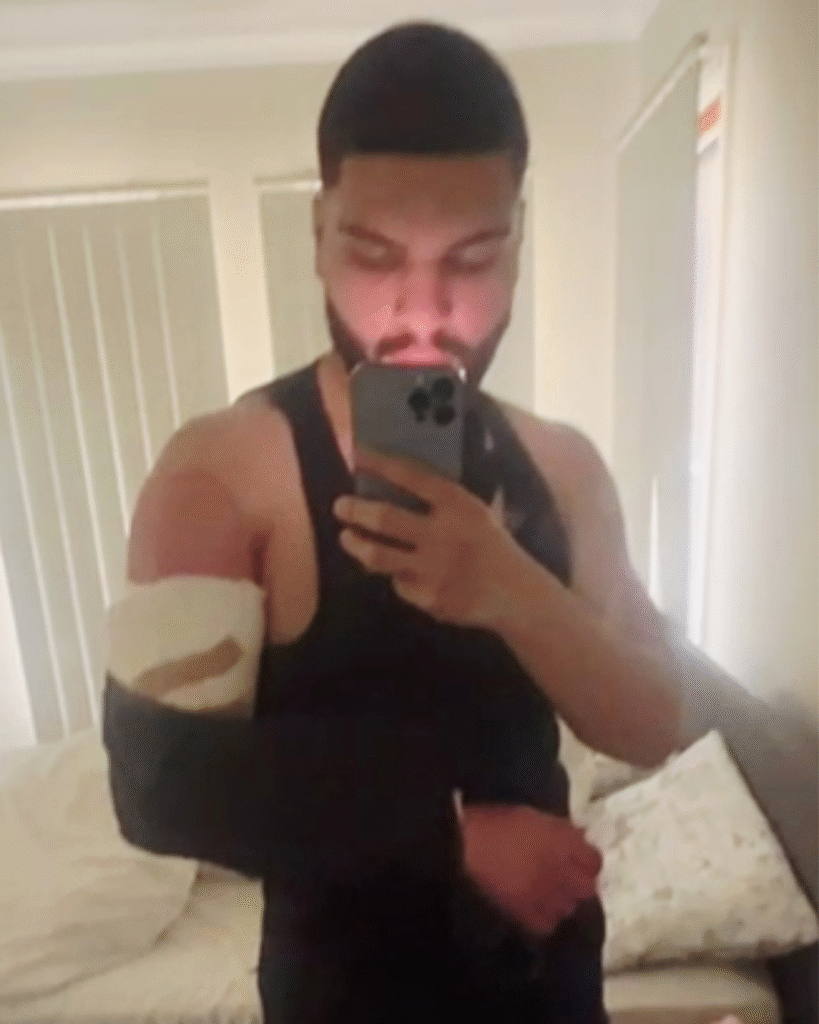
If you’ve fully torn it, yeah — surgery’s on the table. You’ll be stitched up, put in a sling, and then the real work begins: rehab.
Not a generic YouTube rehab. Not a few shoulder circles and band curls. You’ll need:
- Shoulder blade (scapular) retraining
- Rotator cuff strength
- Posture correction
- Bicep loading — slow and smart
- A therapist who treats the whole chain, not just the sore bit
Because guess what? If you skip the proper rehab, that tendon can tear again. And second surgeries suck.
🔐 How to Stop Bicep Injuries Before They Start
Let’s keep it real — your biceps shouldn’t be doing all the heavy lifting. They’re support crew, not frontline workers.
So, do this:
- ✅ Strengthen your rotator cuff
- ✅ Mobilise your thoracic spine (yes, your upper back matters)
- ✅ Train your posture — especially if you sit all day
- ✅ Balance push and pull exercises
- ✅ Learn how to lift properly — using everything, not just your arms
🗣️ A Final Word from Super Myo
If your bicep’s sore, aching, or suspiciously weak — don’t ignore it. Don’t keep blasting it with a massage gun or numbing it with Voltaren hoping it’ll “settle down.”
That pain is a red flag. Your body’s way of saying “Oi, something’s not right.”
Let’s find out why it’s overworked, what’s not pulling its weight, and how to fix it before you end up needing a surgeon and six weeks in a sling.
💥 Got bicep pain and need answers?
Let’s sort it out — properly.
Book in with Super Myo — and let’s fix the root, not just rub the pain.